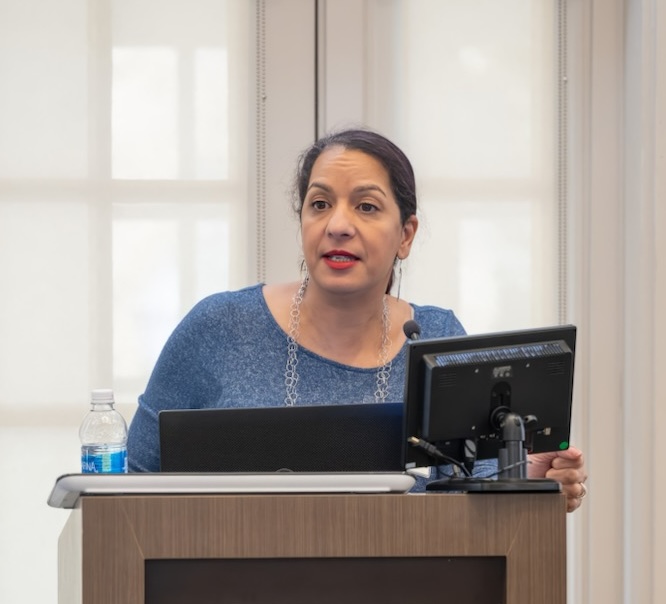
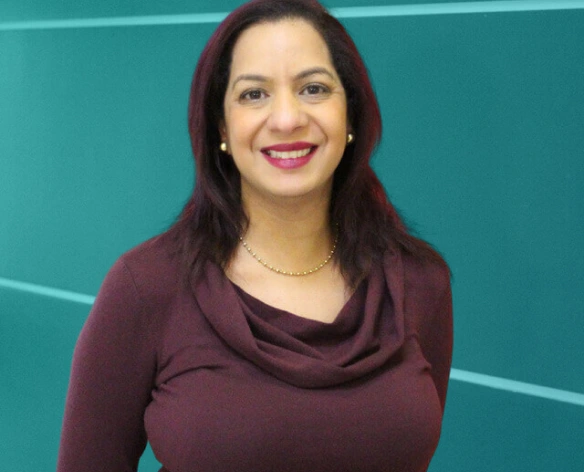
Dr. Geillan Aly

Born in Giza Egypt, and raised in Queens, NY, Dr. Geillan Aly, the Founder of Compassionate Math, is a math educator who centers the socioemotional factors that contribute to success in mathematics. She holds the fundamental assumption that learning math is both an emotional and cognitive endeavor.

A former award-winning Assistant Professor who has taught for almost fifteen years, Dr. Aly transforms math classrooms through engaging professional development and student-focused workshops that center emotions while establishing a culture of engaging with rigorous mathematics. She has spoken across the United States and internationally and has worked with several school districts to support math teachers.

Geillan received her PhD in Teaching and Teacher Education and Master’s in Mathematics from the University of Arizona. Her research focuses on the emotional side of learning mathematics and includes how computer-centered learning has affected students’ abilities to control their learning environment and how meditation may reduce mathematics anxiety. Underlying Dr. Aly’s work is a dedication to equity and social justice.

Her dedication to math education stems from the belief that mathematics is one of the closest ways that we humans can talk to God because it helps us understand the world and the universe around us. She enjoys traveling and seeing live music and is an avid chef, wife, and mother to a beautiful boy. They live near Hartford, CT.

I’ve been there

I’ve been where you are. I took classes where I was afraid to ask and answer questions. I’ve had instructors who were brutal and questioned my intelligence. I took classes where my palms got sweaty. I almost walked away from my career because of it. I spent a lot of time trying to understand why suddenly math became impossible, even if I thought math was beautiful and enjoyable. It wasn’t about how smart I was, or how much effort I put in, there was so much more.

It took a long time to overcome these challenges. Now I want to help you so you don’t experience what I did. Using research-based techniques, you and I will work together to ensure that you are comfortable and successful in math. My methods and techniques help you understand the emotional side of learning mathematics to remove any emotional blocks you may have to help you better understand your content. There is a strong emphasis on diversity, equity, and inclusion in this work because there are explicit and well-documented reasons why women and people of color are not successful in math – none of them having to do with how smart someone is or how hard they work. I will also help you to understand the content so you are not left to struggle on your own.

Compassionate Math will help you take control of the emotions that overwhelm you when you’re thinking about math. You’ll be able to focus on the math without your emotions getting into the way and eliminate your negative feelings towards math. Understanding the material will then ensure your success as a doer of mathematics.

What I stand against
  • Math is often divided into “math people” and “non-math people,” but in reality, all humans possess mathematical abilities; it’s not something inherited.

  • The notion of low expectations suggests that so-called “gifted” students are simply those with better resources. In almost 15 years of teaching, I’ve encountered only a handful of truly gifted students.

  • While anxiety is a factor, reducing trauma to just anxiety overlooks the need for deeper transformation.

  • The belief that math is “clean and simple” is a myth; an algebra textbook encapsulates 5,000 years of human history in just 500 pages! Give yourself grace for not getting it the first time.

  • The idea that math is useless is misleading; if math were truly without value, we wouldn’t use it to control access to careers and opportunities. We’ve intentionally made math undesirable to prevent people from advocating for equitable access.
What I stand for
  • Human beings are inherently mathematical, and therefore our feelings towards math stem from our experiences and how we were treated rather than any innate ability.

  • Math literacy is a civil rights issue; understanding mathematics is crucial for social mobility and combating inequity. 

  • Learning math involves both emotional and cognitive aspects, meaning we must consider the whole person in the classroom. How one feels about math is just as important as understanding math.

  • Equity and representation are vital; women’s crafts like quilting, baking, and weaving embody mathematical principles, while the contributions of BIPOC individuals in areas such as zero, algebra, geometry, and calculus are often overlooked.

  • It’s critical to support teachers and parents, as they too carry math-related trauma. Teachers may hesitate to seek help, and parents lacking resources often cannot afford tutors. They deserve understanding and compassion, not blame.
Keynote speaking

“When students avoid math, they’re not just avoiding a subject — they’re being locked out of social mobility.”

Your audience has heard that math is important. They haven’t heard why their students are failing to engage with it — and what to actually do about it.


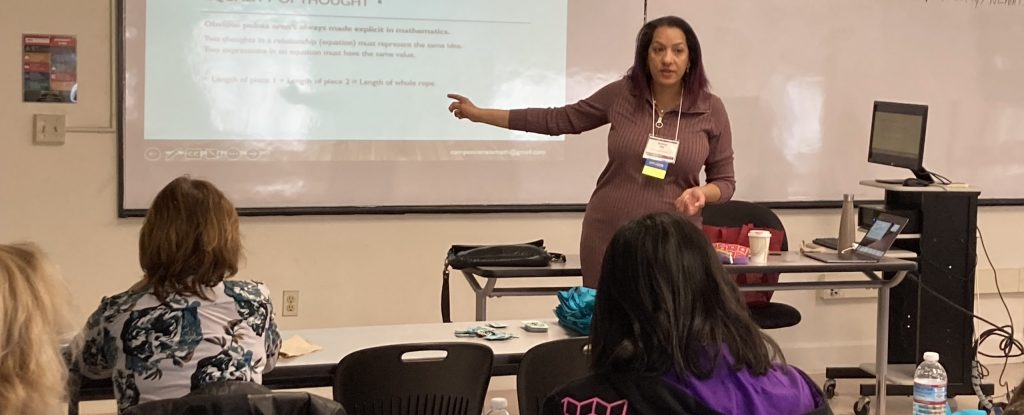
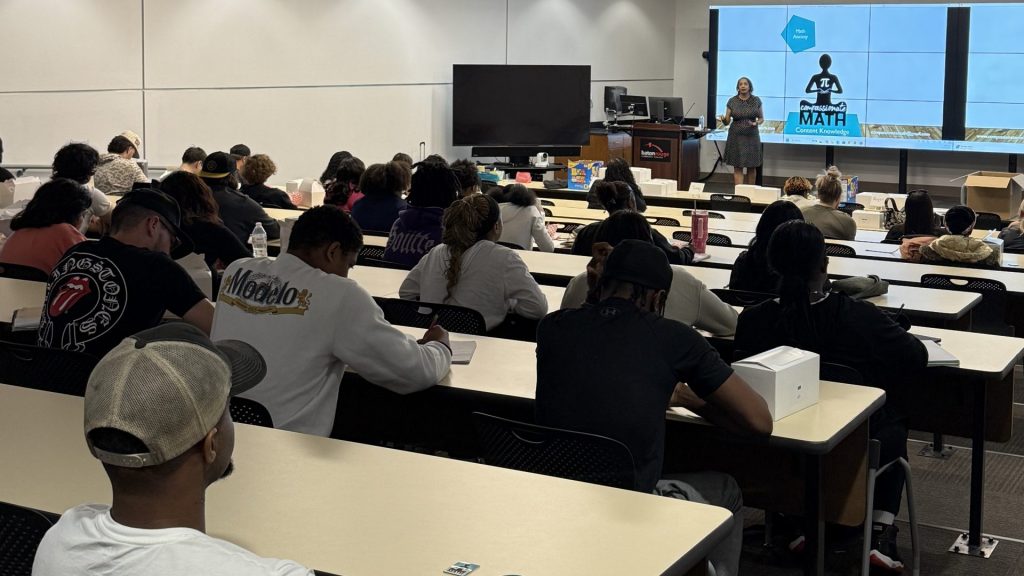
Dr. Geillan Aly brings the research on math trauma to conferences, institutions, and professional development events. She delivers engaging talks that shift how educators understand the problems we have in math class and leaves them with frameworks to foster real change.

Portrait of Dr. Geillan Aly
How I can help you
Find the perfect compassionate math solution for you.

For Universities

Professional development for university faculty and math instructors. Specialized student workshops designed to alleviate developmental math anxiety, increase STEM engagement, and decrease course attrition.

For K-12 Schools

Job-embedded professional development, instructional coaching, and SEL-integrated math pedagogy for district administrators, teachers, and school communities. Designed to overcome math trauma and raise student achievement without sacrificing rigor in Title I and standards-based environments .

For individual learners (including parents)

Targeted 1-on-1 coaching to heal personal math trauma, rebuild mathematical confidence, and equip parents to support their children's math learning journey at home.


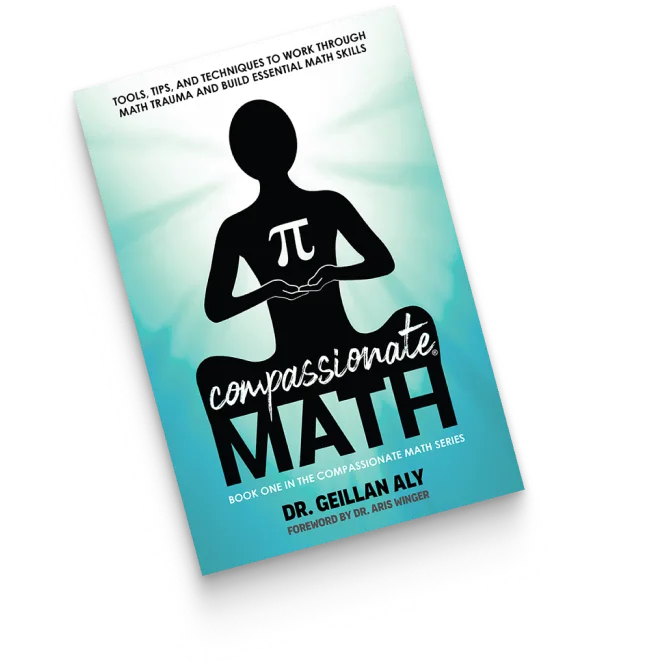
Compassionate Math, the book

Compassionate Math, the book

Compassionate Math: Book One of the Compassionate Math Series, is half compassion (work through math trauma), and half math (conceptually understand arithmetic).

Written for the adult reader in a friendly, yet rigorous tone.