In the early 20th Century learning math focused on teaching basic math skills that would be useful in life and in the mostly industrial jobs people would do. Arithmetic and geometry were big areas of focus. German and Nazi scientists came to the US and helped spearhead and create the missiles and bombs which helped the Allies defeat the Axis. These scientists were invaluable because their science and math education was vastly superior to the Americans’. Conversations and new math curricula were developed to incorporate modern topics and more rigor in math classes.
Then on October 4, 1957 the Soviet Union launched Sputnik, the first artificial satellite into space. This was the political and public relations tool which triggered funding and support for the newly developed curricula. The US couldn’t ignore that in order to compete, education needed to radically change to focus more on STEM. Sound familiar? New Math was the result. However, New Math was introduced and teachers who had never really seen nor grew up with a more abstract mathematical curriculum had difficulty teaching it, especially because they didn’t receive adequate support in learning the content. Sound familiar? Uproar and rejection pushed educational policy to literally go Back to Basics in the 1970s (yes, that’s what the policy was called).
The pendulum has swung back and forth from emphasizing basic skills and “practical math” to focusing on abstract or algebra-focused content. Generations are disconnected from one another. What was familiar to you was likely unfamiliar to the generation before (your parents and teachers) and after (your children). So parents and teachers see unfamiliar and unknown content and freeze when trying to help children. Depending on when you or your parents or teachers were born, disconnects in learning could have very much affected how well you were taught math or how confident you feel teaching someone learning something that is unfamiliar to you.
The Cycle of Benign Neglect says that constant changes to educational policies on learning math, without giving teachers the opportunity and space to learn math content in a supportive and nurturing way, prevents lots of teachers from being confident and amazing when teaching math. Teachers are handed new curriculum without sufficient support to understand the concepts and are expected to meet expectations set by others. Teachers do the best they can, and the next generation reckons with different content and different expectation, again without sufficient support. If a teacher happened to have lucked out and feels comfortable with math content, then it is possible that they never felt the negative emotions which block math learning and may not realize that their students carry negative emotions which must be addressed. This is the Cycle of Benign Neglect.
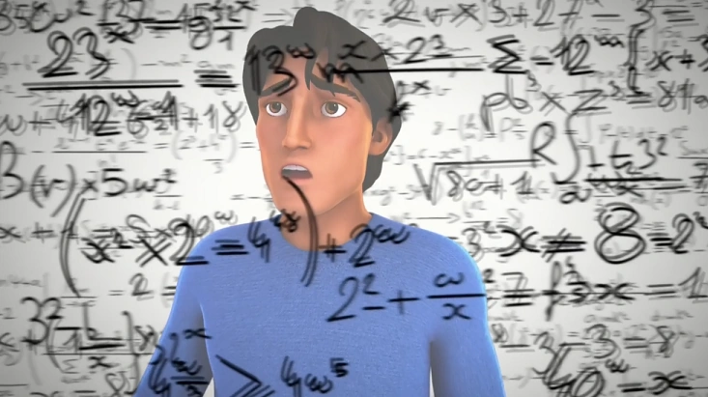
The consequences of the Cycle of Benign Neglect is a country of people who are overly math anxious, aren’t comfortable with math, and do not feel that math is an approachable or do-able subject. Moreover, our society feels that this is somehow okay. If you can’t read, that may be a source of shame; if you don’t know algebra, that may be a source of pride.
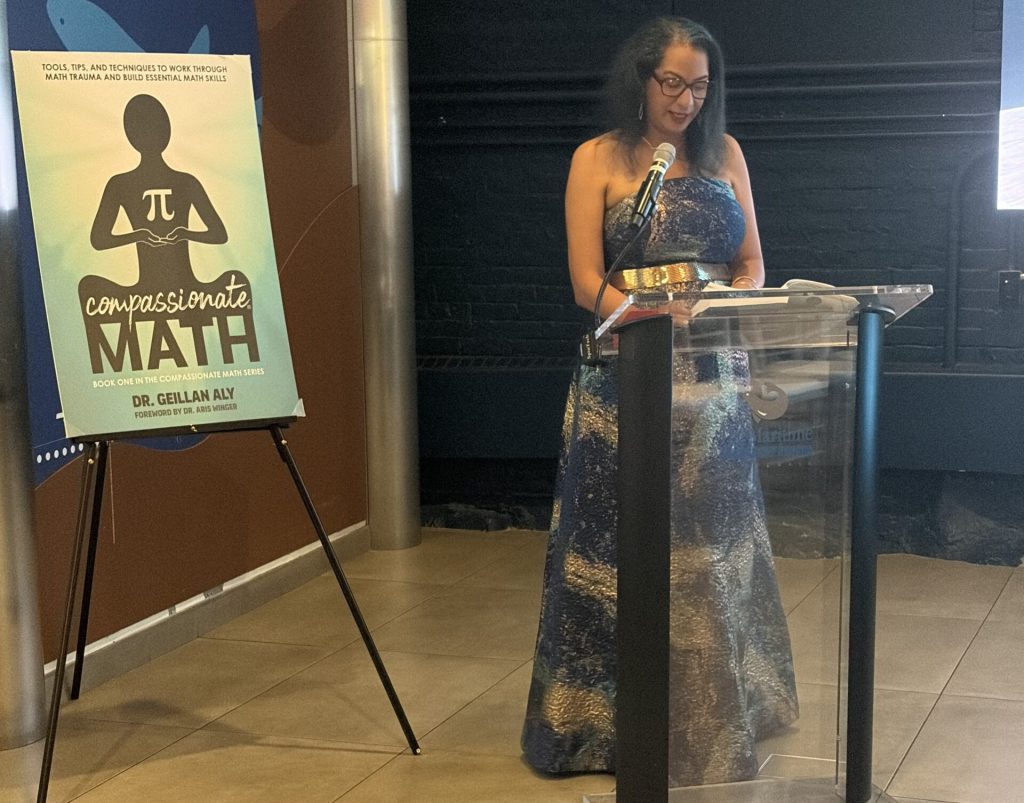
Learn more about the Cycle of Benign Neglect in “Compassionate Math: Book one in the Compassionate Math Series”.
Compassionate Math takes a holistic approach to deal with the consequences of this. Want to learn how?