I was with my kiddo who was bingeing “ALVINNN!!! and the Chipmunks” on Netflix when my ears perked up.
Not because I was excited about another reboot created by AI (as a Gen-Xer I was completely rolling my eyes), but because the episode provides insight into math trauma and a journey to healing.
Here I outline the episode and note how the Compassionate Math framework and good professional development focused on socio-emotional learning (SEL) can be seen throughout the episode.
“Back to School” synopsis
The episode (S1 E16A “Back to School”) starts with Alvin complaining about having to take math.
He asks, “why do I need math? I’m a rock star!” (This is a “values check” by Alvin. If something isn’t important, why spend time on it). Simon answers him that knowing math will help him understand his ticket sales, revenue, marketing, etc. So even if math seems useless, it’s important for rock stars to understand math.
We’ve already seen how math trauma can still haunt rock stars, so Simon isn’t far off at all.
Dave tries to teach Alvin the importance of a well-rounded education, since having a diverse set of skills can open many doors.
In the middle of this conversation Dave gets a letter sent special delivery stating that he never passed his high school math class, invalidating his diploma unless he repeats and passes algebra!
Now Dave has to return to school with the chipmunks and sit in algebra class with them!! Now tell me this isn’t a nightmare scenario to engage any parent watching.
The next day the Chipmunks and Dave are together in math class.
Alvin is asked to show how to solve their homework assignment and he confesses that he didn’t do it because he can’t understand it (Knowing he doesn’t understand, Alvin is not engaged in his work).
Simon says he would help him, Alvin exclaims “but you can’t help me” (an expression of Alvin’s low self-efficacy). Simon responds, “I would if you would pay attention”.
As good hearted as Simon is, he’s scolding Alvin to focus, rather than engaging him. Poor Alvin continues to be scolded. David sternly barks “you better be going up to finish your math” as he sits down to do the same assignment on his own (Why not work together, to make this a collaborative assignment, Dave?).
As Dave starts trying to work on his own homework, the look of confusion on his face is pretty clear.
He checks the score of the game and when Simon asks him about dinner, Dave hops right up and leaves his textbook. Anything to get out of doing math homework! Dave is also avoiding math.
The next day in class, when Dave is asked to solve a homework problem, he starts muttering excuses and says he doesn’t want to, choosing detention over not solving the homework problem.
In detention Dave tries to explain to the math teacher (Miss Smith) why he ended up in detention, but she wouldn’t hear it “NO TALKING!” (Here’s where good PD focused on socio-emotional learning should come into play).
In detention, a bond forms between Alvin and Dave. That night, Simon scolds them both over not doing their math homework and later asks, “Did you guys make any headway?”.
Alvin responds that Dave and he are both creative types “we’re not math geeks or mathematicians”. They even share the same DNA: “Don’t know arithmetic” (Math identity anyone??).
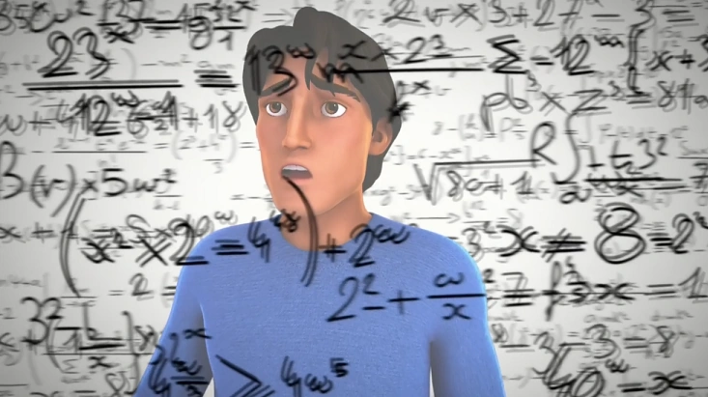
From there the anti-math bond between Dave and Alvin strengthens. Cue the musical interlude: Dave and Alvin continue get into trouble, start acting out (their attitude around learning takes a nosedive the worse they do in class), and whenever they’re at the board trying to solve a math problem, they look frightened, and don’t know what to do.
Ms. Smith and Simon continuously shake their heads and register their disdain. The cycle continues.
Simon finally confronts Dave and exclaims that Dave is setting a bad example. Dave says he’s not trying to be bad; he just doesn’t understand math (Here’s the breakthrough).
Simon tries once again to work with him. Except this timing is pretty bad in my eyes; Dave was exhausted and just crawled into bed and falling asleep. He gets up and gets to work, but keeps drifting off.
Theodore keeps blowing a whistle to wake him up while they’re working at the board (that is not the Compassionate Math way, and if it were Alvin, this technique would have backfired. What likely kept Dave going was strong motivation behind getting his diploma).
The next day Dave can answer Miss Smith’s question and remarked to Alvin how helpful Simon was. As a result, Dave doesn’t have detention and is looking forward to studying that night “it’s actually kinda fun once you get the hang of it.”
Now that Dave found some success, and understands the material, his efficacy increases, and he’s more willing to engage. Alvin walks away dejected.
The next scene has Dave, Simon, and Theodore in the kitchen after school.
Dave is reminding Simon to “start with something easy” and asks, “you all know your parts, right?”.
Alvin walks in and Dave “says” to Simon he’s still confused (clearly an act). Simon says not to worry and that they’ll start with something easy, asking Dave what 7 times 8 is.
Dave fake mutters as Alvin whispers 56. Alvin smiles (increasing confidence, the same way Dave gained his confidence).
Simon goes on and gives an algebra problem using context that Alvin would relate to (aligning with Alvin’s values). Alvin interrupts and answers quickly.
Simon asks Alvin to then help Dave “understand” the content. Alvin is happy to help (giving Alvin status and building self-efficacy by establishing Alvin’s identity as a “math person” who can help Dave).
Dave plays along and they get to studying.
Alvin’s next exam is a C-, he walks away “I crushed it!”.
Miss Smith begrudgingly acknowledges that it’s an improvement.
Dave passes his class and gets his diploma and Alvin uses this as an excuse to throw an epic party without Dave’s permission!
Of course, the episode ends with Dave yelling “Allllviiiiinnnnnn!”
What this all means
Here’s how math trauma plays out among too many students. Math content is presented with context, making the content irrelevant, hard to understand, and leading to a lack of success.
That lack of success shifts attitudes and lowers motivation. Once Alvin and Dave start seeing the content in ways that makes sense (for Dave it was seeing the logic, and for Alvin it was aligning to his interests), change begins to happen, efficacy builds, and math identity strengthens.
The various factors of the Compassionate Math framework play on one another and demonstrate how math outcomes go down in students as math trauma builds, but also how to right the ship and support students.
There were also a few things that I noted and want to highlight (I’ve already highlighted how I disagree with how Simon worked with Dave).
First, the school seems to focus on some level of equity since the chipmunks are in chipmunk-sized desks. They don’t have to sit at regular sized desks, giving them an opportunity to feel comfortable enough to engage.
In that school, it seems that the chipmunks are treated well when it came to their need for accommodations. That’s something to be commended (having rock stars attending the school probably helped any budget questions that came up).
Second, Miss Smith, the math teacher, seems to hit the “mean teacher” trope really well.
In Dave’s first day of detention, he was trying to explain the reason he never did his homework was because he didn’t understand the content. However, before he could finish the sentence, he was shut down and cut off “NO TALKING!!”.
The shame and dehumanization in this moment can’t be overlooked.
Dave is an adult, out of school for many years. Rather than provide him the opportunity to review (or go to night school??!) he has to pick up in the middle of the semester and is expected to be a full participant in the class.
Miss Smith didn’t show any compassion to Dave and his circumstances. Even worse, she scolded him the same way she would scold any other child in her class.
It seems like Miss Smith didn’t take into account Dave’s circumstances and treated him like any other student, when he wasn’t (this is the difference between equity and equality and the danger of treating everyone the same way).
Finally, it’s interesting how many of the chipmunks’ academic hijinks are related to math.
Miss Smith plays a prominent role in being the mean teacher throughout multiple episodes. There are also lots of plots and subplots involving math.
In “Members Only” (S2 Episode 8A), Alvin teaches the math club to stand up for themselves and they become school bullies. There’s also “The Crow That Ate My Homework” (Season 4, Episode 82B) where the chipmunks go on an adventure to prove to Dave that Alvin got a good grade on a math test and can go to the water part (a Crow ate the actual exam).
The stereotypes about math and one’s ability to do math seem to echo throughout this series in plotlines and comments made throughout.
Seeing these negative math stereotypes in media upholds people’s math trauma, teaches kids that it’s ok to not like or do well in math, and honestly makes me wonder about math trauma and the show’s writers.
Yes, this is a silly cartoon, but it’s an interesting illustration of the intersectional nature of math trauma. It shows how a small issue with math can compound, leaving a student fully disengaged and convinced that math is not for them.
The nature of how math is taught (fast = smart; you saw it last year so you should remember it) results in a compounding effect that leaves too many people wondering why math is useful and convincing so many that math isn’t for them.
The result is a society that is so afraid of math that we become mathematically illiterate. Math trauma doesn’t have to destroy someone’s potential.
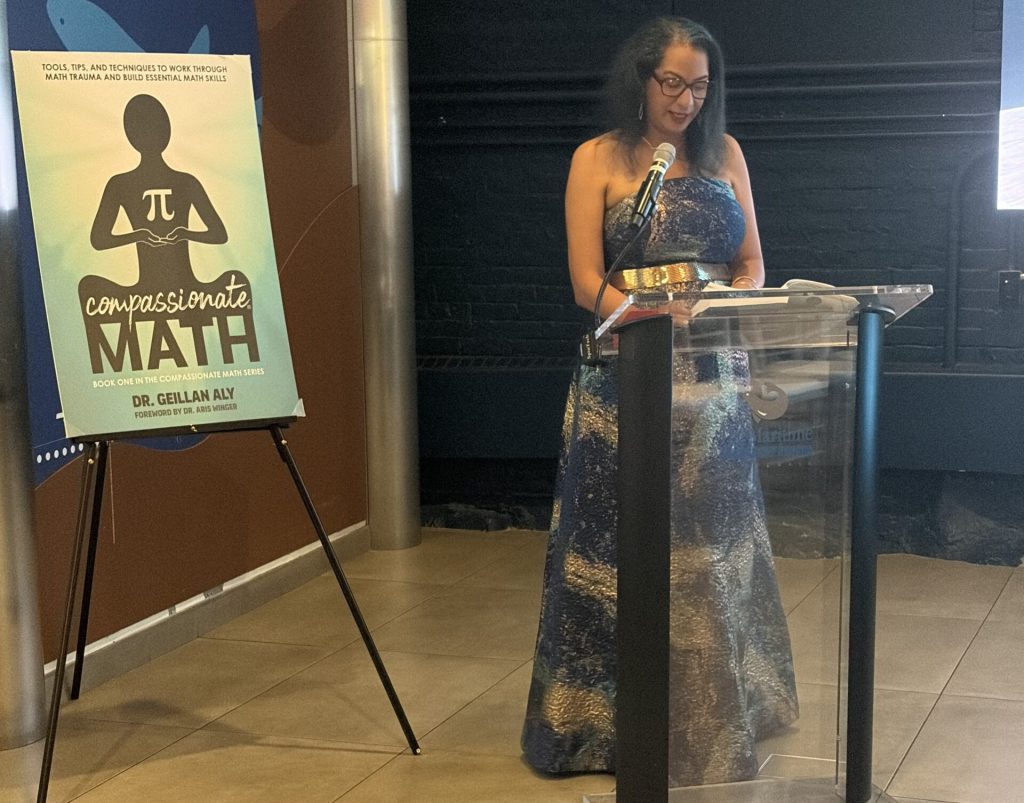
Compassionate Math, the book aims to support you so you can have healing journey similar to what Dave and Alvin experienced.
©2026 Compassionate Math, LLC. All rights reserved.
This material is original content and was not created using AI (except for standard spelling and grammar checkers).