
January 15, 2026
There’s something that bonds all of us. I don’t just mean people, or living beings, but everything. Rocks, the deadness of space, life on Earth (and beyond), all of it.
Like many who have come before and after, I’ve wondered about my place in the universe. I’ve thought about trying to understand how it all fits together.
I wanted to try to get a glimpse of God (the closest word I have to all that this is).
Religion is beautiful, yes, but as a woman I found that seeing God through the prism of religion bends the light in ways that make me uncomfortable.
How does one go on a spiritual quest to learn the secrets of the universe? For me, I found that math is the closest way to understand God.
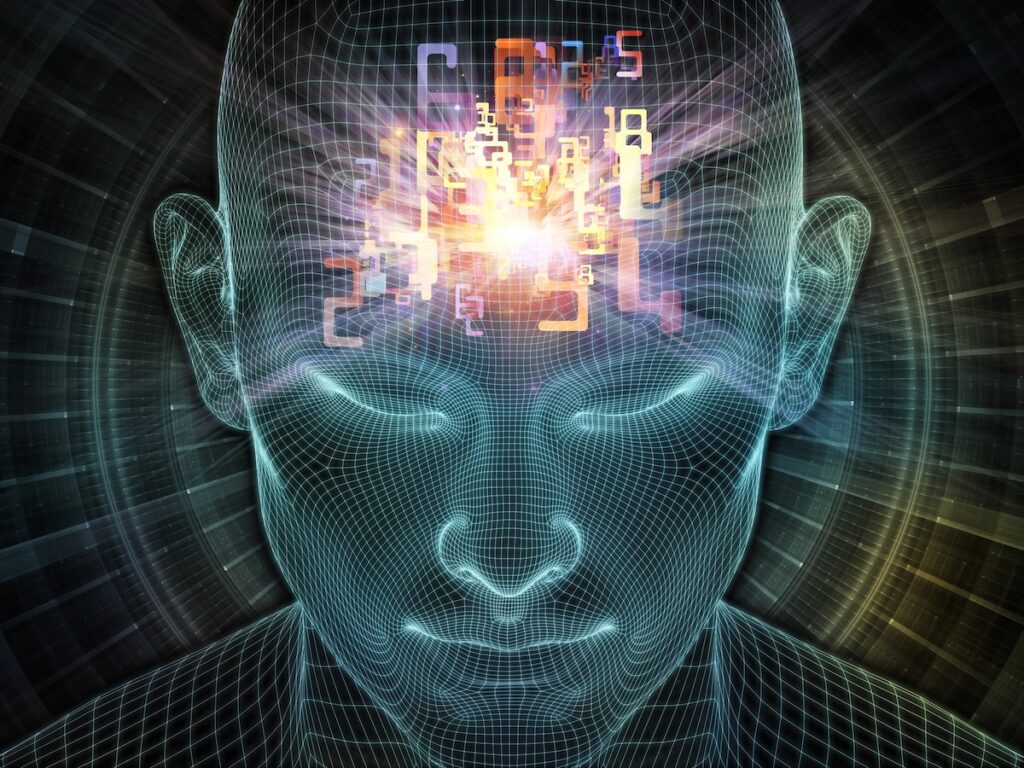
The secrets of the universe
A friend once handed me The Celestine Prophecy and, at the time, it was what I was craving.
I’m not going to go back and check my reference so forgive me if I don’t get this correct. In the book, there was someone doing research on plants and how plants receive and send off energy.
Although a novel, I started to look for and learn about breakthroughs in plant and animal consciousness. Over time, I learned that trees talk to each other and crows hold grudges.
With these realizations, I was finally able to let go of the uncomfortable idea we’re given that humans are special creatures sitting atop all other creatures.
We are actually one facet of a larger connected universe. As a part of the universe, I wanted to understand it better.
The world of physics is one way to do this. Perhaps by understanding energy, and how energy connects us all, we can get a deeper glimpse into what unites everything.
I mean, after all, physicists are working on the Grand Unified Theory. If there was ever a name that caught my attention it was that.
But no, there’s something deeper than physics. A space that brings together all the sciences. A subject that spun off from philosophy (how We first grappled with these big questions about who we are and why we are here).
I went back to an early love, mathematics.
How math is applied philosophy
I define mathematics as an applied philosophy. Through mathematics, we have developed a language and process for understanding and manipulating our world. Rather than being passive players in how the universe evolves, we can alter our environment significantly. Mathematics is a major driver that helped us do this. Mathematics as a subject came from what you’d expect. Practical necessity. As early farmers, we needed to count our sheep to know if all of them came home. As builders of homes and monuments, we needed geometry. As farmers and sailors, we needed to learn how to use the stars as our guides. But with time, the practical necessity became more esoteric. When a society is no longer worried about surviving, it starts thriving[1]. We started asking questions for the sake of asking questions. Philosophy was born. Across the ancient world, priests, scribes, astronomers, and other learned people were asking more ephemeral questions about our world and our place in it. In Ancient Greece, influenced by the Arabs and the Hindus, these questions were broken down with a critical focus on defining words. Plato and Aristotle’s writings ponder meaning and define words. From there we are asked, how do we know what we know? Debates, dialogues, discussions, and the writings of philosophers continue, to this day, there is a tradition of asking questions for the sake of asking questions. Philosophers force us to think.
Mathematics, as an applied philosophy, helps us answer our biggest and smallest questions. Think about it this way. Consider this dialogue:
Here’s an equation: x+3 = 7. What is x?
Obviously, it’s 4.
How do you know?
Because 4 + 3 = 7, duh.
OK. True. So x can be 4. Can x be any other number?
No.
How do you know?
The questions asked in mathematics in general may seem simple or ridiculous on the outside but boil down to a basic desire to know that what we know is absolute and based on ideas we (in this case, mathematicians) agree are fundamental. Studying mathematics can be seen as a practical way to study human thought, or a way to bring us together to a shared understanding. On a practical level, mathematics is one way to understand and, to some extent, attempt to control the world around us. For me, mathematics is the closest humanity can get to understanding the secrets of the universe, the closest one can get to understanding God (however you may or may not define God).
[1]
This idea is attributed to Maslow and his hierarchy of needs, originally published in 1943 in his book A theory of human motivation. There is research that indicates that Maslow was strongly influenced by his time living among the Blackfoot peoples whose worldview incorporates self-actualization and how communities can thrive.
Connecting mathematics with God
The questions asked in mathematics may seem simple or ridiculous on the outside but boil down to a basic desire to know that what we know is absolute and based on ideas we (in this case, mathematicians) agree are fundamental.
Studying mathematics can be seen as a practical way to study human thought, or a way to bring us together to a shared understanding. On a practical level, mathematics is one way to understand and, to some extent, attempt to control the world around us.
For me, this means that mathematics is the closest humanity can get to understanding the secrets of the universe, the closest one can get to understanding God (however you may or may not define God).
Mathematics itself is a way to decode and understand anything and therefore is the closest tool we have to decode the mysteries of the universe.
Mathematics teaches us the following:
- How airplanes fly.
- How the universe began.
- When the dinosaurs walked the earth.
- How much vitamin A I need today.
- Whether a person’s face is considered beautiful.
If we can’t use mathematics to explain something, then we don’t actually understand it.
This is why we can’t use math to explain things like consciousness or love. These are ideas outside the realm of our current understanding. But that’s ok. We need magic in our lives as well.
Why am I writing about my perspectives on knowing God and how mathematics can be a tool to do so as entry #1 in a blog for Compassionate Math? Because if I’m going to discuss some of the topics I hope to explore, I need to position myself in a way that is raw and honest. I’m excited to have this conversation.
©2026 Compassionate Math, LLC. All rights reserved.
This material is original content and was not created using AI (except for standard spelling and grammar checkers).