
June 15, 2026
Recently, I went to visit an institution and met with a group of college students to hear about their challenges and answer questions.
This conversation, more than others, felt different. The discussion we had and the observations they shared helped me have some interesting insights into our students and where they are now both emotionally and intellectually.
The best part of my job is doing a math trauma workshop with students. As often as I do it, I feel that it isn’t enough because it fills my cup so much and I know students benefit from it.
I also miss teaching (which I love) and I’m trying to figure out how to stabilize my schedule so I can at least adjunct and keep a connection with students. I absolutely think no one should be doing professional development long-term if they aren’t still working actively with students.
But although I’ve been out of the classroom for a few years, I have an interesting advantage when it comes to student insight. My math trauma workshops help me meet students and connect with them about things they probably wouldn’t talk about if I were their professor.
To be honest, I’ve had some really intimate conversations with students when I taught, but somehow, these recent conversations seem different.
Maybe it’s because I’m not their professor; maybe it’s because I’m a visitor and sometimes it’s easier to be more honest with a stranger. Whatever the case, I’ve had wonderful, personal conversations with students about their math journey and their challenges learning math.
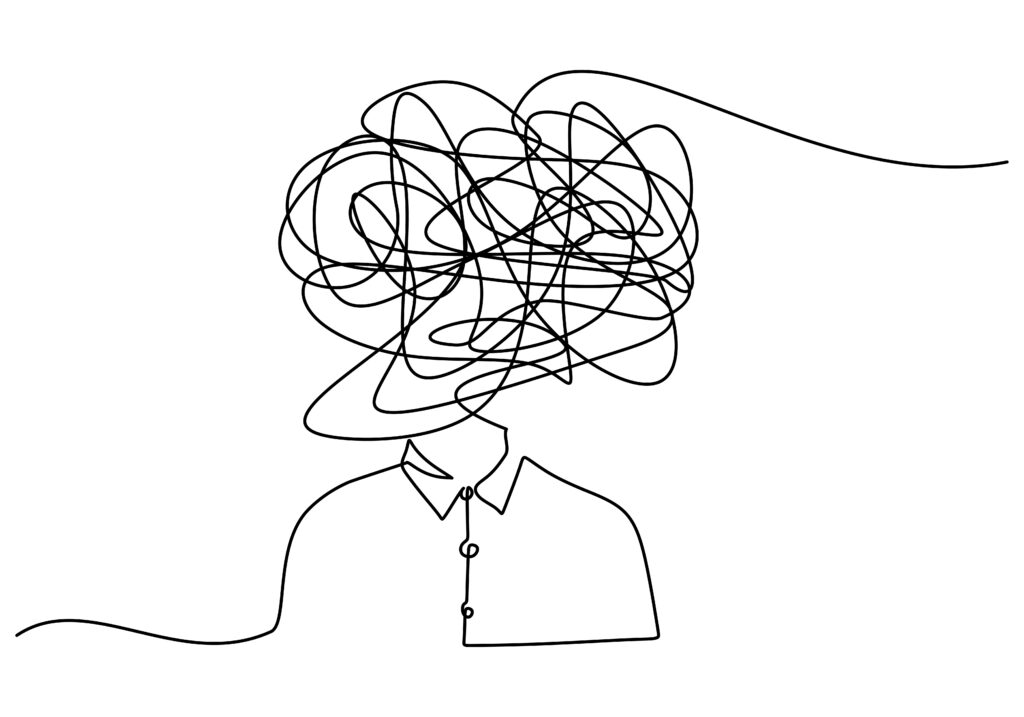
Hustling No Matter What
I like starting off these conversations with a question to help people get to know one another and get the conversation going.
I picked something that often gets good side chatter going, “What did you have for dinner last night?”. I realize that I was probably still annoyed at the warm coleslaw that came with my micro wrap on the airplane the night before (a terrible combination of corporate shrinkage and bad service).
As we went around the room, several students mentioned they didn’t eat dinner the night before because they were studying. In a room of 10 students, I think a good 4-6 mentioned they didn’t have dinner because they were busy.
The thought of food insecurity crossed my mind immediately, but considering how they were chuckling over their recent assignments and exam schedule I don’t think anyone was hiding a critical need (I could be wrong; you never know).
If this is you, if you skipped dinner because you are too busy or need to study, understand that you’re not helping yourself by pushing yourself that hard.
You need to pause and take a break.
You need to fuel your brain.
You need to walk away and let your eyes rest.
Math is about making connections, seeing the big picture, while also being able to practically apply what you’ve learned. To do this well, you have to be rested and give your brain the chance to make these connections.
Good food, water, and rest are absolutely necessary for this success.
When I was having a hard time in math, I thought pushing through was the way to survive. All it did was make me cranky and annoy my friends and family.
Do you know when I do my best work? When I sleep 8 hours, eat well, drink water, and get fresh air and/or exercise. On those days I do better work, ideas came more easily, and I feel good.
Hustle culture has taught us that if you aren’t productive 24 hours a day, then there is something wrong with you and you’re going to be left behind. That’s absolutely not true. Morning routines have been debunked and hustle culture leads to anxiety, depression, and burnout.
Don’t fall for the hype. Take a moment to breathe, rest, and feel awe, which will make you feel happier and healthier.
How do you avoid the hustle culture mentality around your studies?
Do a little bit of work every day or two. Learning is a marathon, not a sprint. You’ll get more out of 8 hours of studying over two weeks, than if you do 8 hours in one day.
Just like exercising, if you push yourself through a really hard and unfamiliar routine, you’re more likely to hurt yourself than build muscle.
Also, find your community; work with others in a study group. You’re likely to make faster progress and laugh along the way as you all connect with your peers.
If you’re reading this and thinking about your students, remind them that good food and rest is critical to learning.
Set the example and counter the narratives around hustle culture.Talk openly about how you, yourself, can feel the effects of missing sleep or that you get cranky when you don’t eat and suggest they pay attention to how their behavior or thinking changes when they deprive their body of its basic needs.
Before a test, tell your students to get a full night’s sleep.
Also, at the beginning of the term, you may want to share resources on where they can get food for free. Many campuses have opened food pantries to address food insecurity and have created programs to provide other basic resources (that we shouldn’t need in a country this rich, but here we are). Let students know about these services and remind them again later in the semester when the stress levels in your class builds up. I’ve also sent out emails to my students after I run (or even attend) a program that was catered so they can grab leftovers (because at these events, we’ve all seen the tons of food that goes to waste).
Making errors and how that makes you feel
Some of the students I chatted with were peer tutors and mentioned something interesting happened whenever they pointed out an error to the student.
The student apologized. I don’t mean they acknowledged their error by saying “oops, I’m sorry”. No. They were deeply and profoundly apologetic, like they were regretting every decision they ever made in life that resulted in that moment.
The tutors felt awkward and asked me for advice on how to respond because even though they reassured the student that it is ok to make mistakes and that they are learning (and therefore would obviously be making mistakes), the tutors felt that there was more there and felt a sense of responsibility for the student’s feelings.
If this is you; if you feel a major sense of shame when an error you make is highlighted, remember that you are still learning.
Learning means that you will make mistakes, and that you’re supposed to move forward from those mistakes to increase your skills and knowledge.
We live in a world where a camera is always there to capture every dumb thing we ever do and that’s awful and scary.
That may be true, but what’s also true is that we need to make mistakes in order to learn. Unless you’re a prodigy, mistakes are a part of the learning process and are critical for you to improve.
When you’re told you’ve made a mistake, accept that this is feedback and an opportunity to get better because we can’t get better if we never make a mistake.
I’d also suggest thinking about your math trauma and thinking about how to work through it.
If you’re reading this and thinking about your student, consider how personally they may take their mistakes.
Think about how you frame mistakes and how you foster vulnerability in your classes.
I do workshops with teachers on fostering vulnerability in math class to address the high-stakes nature of math class and how psychologically devastating mistakes can be on someone. There are lots of great moves in the classroom that help put students’ mistakes into perspective and reduce the psychological devastation that comes from seeing errors.
More than anything, make sure to normalize mistakes. Accept mistakes from students, and if they point out your mistake DO NOT do that awful “I was making sure you were paying attention” move. Thank the students, acknowledge that you too make mistakes, and set an example of gracefully moving on.
Reading is fundamental
Do you remember the “reading is fundamental” public service ads?
It was a campaign, funded by a non-profit with that name to get kids to love reading. When I was a child, there was the show “Reading Rainbow” that also got kids to love reading. Dolly Parton has the Imagination Library that gave away books to kids. When my son was born, we were gifted with books from the hospital. These are just some of the many charities and groups that try to instill a love of reading in kids.
Why? Because reading is a critical skill. It’s absolutely necessary to be a functioning part of our society.
Unfortunately, these students admitted to me how terrible their reading is but don’t know how to fix it.
Whether this is a new realization or something they were grappling with for a while, they were generous enough to share with me that they spend way too much time on their phones and recognize that the constant push of social media has made them addicted to it and they don’t know how to get out of it.
If this is you, if you see that your reading skills are not where you want them to be and that you are addicted to your phone, there are some things you can do.
First, work through your feelings about this.
Regarding the social media and the phones, this isn’t your fault. Social media companies have designed their apps to be addictive and it isn’t an accident; it’s quite deliberate to increase profits. It’s another part of our society that’s addicted to dopamine.
In terms of issues with reading, over half of all American’s read at or below a 6th grade level. You’re not alone. Too many Americans don’t read and are addicted to their phones. These problems, just like math trauma, isn’t a YOU problem; it’s a societal problem.
But there is hope. You can improve your reading in a very simple manner.
Put down the phone and start reading.
OK. It may not be that simple especially if you have dyslexia, or don’t know your phonics. But you can learn to read. I’m not a literacy educator and I don’t want to say something completely ignorant or wrong. If you need help with your reading, reach out to me and I’ll help you find some connections in your community.
But as an educator, let me just say this about reading, you can improve your reading if you take small steps to improving your reading (try reading A BOOK MADE OUT OF PAPER for 20 minutes). It may be hard, but it’s absolutely do-able.
Start by putting the phones down and thinking about how little you get out of endlessly scrolling. You can also put a timer on your phone to pull you out of the trance and remind you to stop scrolling.
If you’re reading this and thinking about your student, this is a space where real compassion is necessary.
It’s easy to blame the student, but just like math trauma this problem didn’t come from nowhere; it’s the result of years of practices, systems, and a culture that made reading a low priority (even with all the amazing programs like the ones I mentioned). They see and know what happened to them, but don’t know how it happened or how to fix it.
This is also a space where we can all have a little bit of empathy. How often do you read? Are you a big reader? Have phones and devices affected how often and how much you read? I know it has affected me and many people I know (including other teachers and faculty).
Reading has declined overall and we’re all guilty of it because it’s become really easy to not read. We educators also added to this problem by taking away accountability around reading.
How many times have you thought “students don’t read so we can’t assign a book”? In fact, students in high school aren’t reading whole novels as much as they used to!
So what do we do about this?
Have students read!
I used to assign reading the math text for credit and created a handout to help students get the most out of these readings. Perhaps reading the textbook and taking notes could be an extra credit assignment. Perhaps EVERY class and EVERY assignment could have a word problem or two for students to solve.
If we (INCLUDING MATH TEACHERS) all have our students read a little bit every day, we’d make a huge impact on their education and their lives.
©2026 Compassionate Math, LLC. All rights reserved.
This material is original content and was not created using AI (except for standard spelling and grammar checkers).
One Response